


Revealed: the nail & beauty products that can & can’t be recycled
By Katie Barnes | 18 March 2026 | Business & Education

Recycling is a challenge for many small businesses, particularly in terms of accessing services to process waste materials. For nail and beauty professionals, this can prove even more difficult…
While specialist waste collection services do exist in some areas, they are not consistent and may prove expensive. Unfortunately, most of the waste the beauty industry produces isn’t classed as ‘likely to be collected’ materials. Every local authority and private collection company is different, so it is important to get in touch with them. From speaking with various local authorities, collection companies and sustainability charities, this has been the general outcome.
I have also discovered that just because we send something to be recycled, it doesn’t mean it is. If an area does not have the facilities to process an item, it will end up in landfill.
Many products we dispose of in the beauty industry are considered contaminated, therefore not recyclable:
- Tissue/kitchen roll soaked with monomer or nail products.
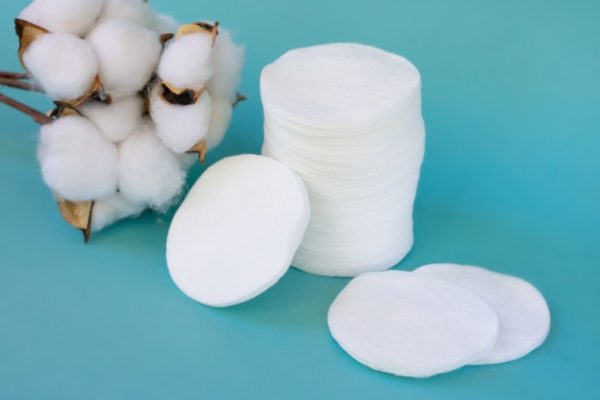
- Cotton wool/lint-free wipes soaked with antibacterial spray/IPA, facial or cleansing products. Regular cotton pads also don’t biodegrade due to the bleaching and mixing processes used to create them.
- Brushes with aluminium handles and kolinsky sable or synthetic hair, which have been used with nail products.
- Nail files with a plastic core and coated in sandpaper, which come into contact with a client’s nails.
- Glitter that has spilled and/or come into contact with nail products.
- Dust and product waste from nail enhancements.
Unfortunately, due to the quantities in which beauty businesses need to recycle these items, most private companies will not collect them. Furthermore, many local authorities will consider them contaminated, as they have come into contact with a customer. Therefore, they are considered in the same category as nappies, which sparks a debate of separate collection due to risk.
Anything which has come into contact with a client – be it blood/bodily fluids (from wax strips etc.), acrylic filings, residue or any cardboard or item that is stained/dirty with paint, product or dirt – cannot be recycled.
Plastics
We must not demonise plastic, as without it, our careers would not exist. Did you know that most plastics originate from crude oil? This is how nail products are also made.
It can take up to a thousand years for a piece of plastic to fully degrade. So what can we do to help the environment? One idea is to cut down on single use and non-recyclable plastics that are not able to be repurposed.
There are eight types of plastic, and each needs to be treated differently.
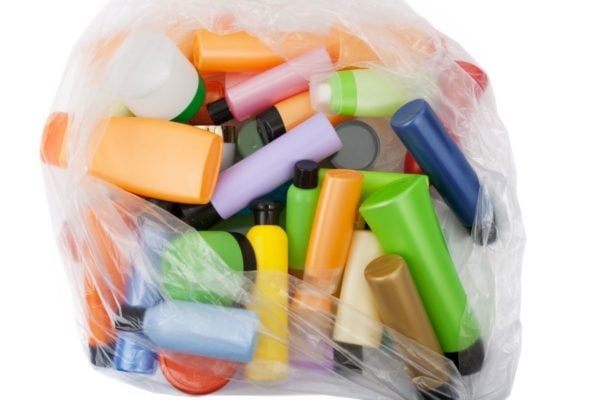
Recyclable plastics:
- PET (Polyethylene Terephthalate) is the most commonly used plastic, found in items such as water bottles and some beauty packaging. However, while the main bodies of items such as trigger sprays can be recycled, any lids with metal mechanisms such as springs cannot.
- HDPE (High-Density Polyethylene) is the stiff plastic used to make containers such as bottles, and is the most used plastic for beauty industry product containers.
- PP (Polypropylene) is sometimes used in cotton wool and wipes – and is commonly found in the packaging of these items. Polypropylene is often recycled to make items like battery cases, brooms and bins.
Non-recyclable/hard to recycle plastics:
- LDPE (Low-Density Polyethylene) can be found in shrink wraps, squeezable bottles and plastic wrappers. LDPE requires special handling and cannot be recycled via at-home recycling.
- PVC (Polyvinyl Chloride) is the flexible plastic used to make plastic wrap, blister packaging and more. While PVC is technically recyclable, it is extremely difficult to recycle and mostly ends up in landfill. However, PVC can be repurposed.
- PS (Polystyrene) is most often used to make styrofoam and foam packaging. This is not accepted in standard household recycling and is rarely recycled.
- Bioplastic is a popular alternative for single-use plastic items like straws and utensils. Bioplastic simply refers to plastic made from plant or other biological material, instead of petroleum. These products require industrial composting conditions to break down and cannot be composted at home.
- ‘Other plastic’ includes every other plastic category not listed above: both non-recyclable and ‘biodegradable’ plastics. Polylactic acid (PLA) comes under this category. It is made from plant-starch instead of petroleum therefore is marketed as ‘biodegradable’, however it is not accepted in standard recycling schemes.
Glitter
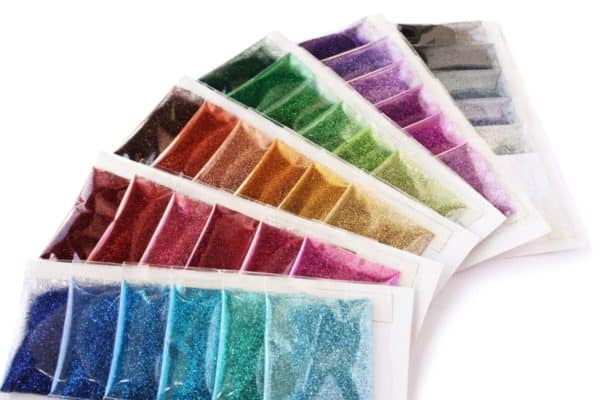
While glitter is seen as a ‘must’ for many nail techs, let’s look at the bigger issue. Most glitter products are made from PET plastic, which contributes to the growing problem of microplastics in the environment. Microplastics have a detrimental impact on marine life. Some ‘eco’ glitters are plant-based but coated in plastic. Many glitters are topped with aluminium for reflectivity, alongside a thin plastic layer. Another form of glitter is mica glitter, which is increasingly used in cosmetics.
But how can glitter companies call a product that’s coated with plastic biodegradable? Unfortunately, terms such as ‘biodegradable’ and ‘eco’ are not regulated, resulting in manufacturers putting them on their packaging without any verification. This practice is known as greenwashing – where brands use environmental language for marketing purposes without evidence to back it up.
Studies testing PET, biodegradable and mica glitter found that mica caused the same ecological damage as PET. Biodegradable glitter also showed a negative effect on the marine food chain, suggesting that no current form of glitter is without environmental impact.

Are you enjoying this content?
Join our community to receive more like this
One of the issues with glitter is that the excess is often washed off in sinks or laundry, subsequently entering the water system. One step to make a small difference is to look at the way in which we clean up glitter.
Glass
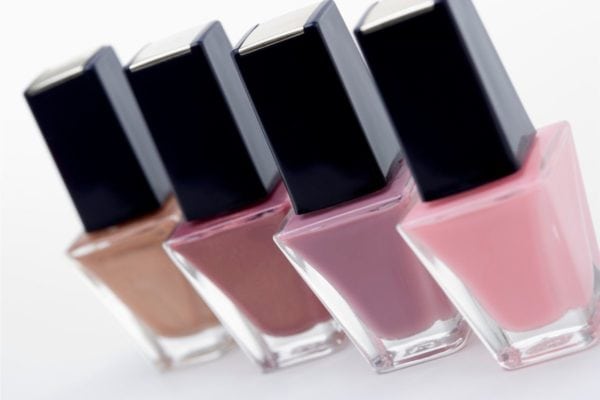
While glass can be recycled indefinitely, several local authorities confirmed that glass recyclers are mainly looking for glass from food packaging, rather than other types of glass, and that nail polish bottles and other industry-used glasses cannot be recycled. Furthermore, putting nail polish bottles in your recycling can contaminate the contents, rendering a whole load unrecyclable.
Metal tools
Metal tools are recyclable, but need to be collected by a private company, such as Green Salon Collective. This may prove costly or difficult if only recycling a small amount. Taking care of your nail tools, following manufacturer’s instructions with use, care and cleaning will support the longevity of your tools, reducing the need to replace them. Resharpening and servicing your tools is one eco-conscious habit where you will see immediate benefits.
Aluminium foil
Aluminium foil, cans and aerosols can all be recycled and re-melted infinitely to make new aluminium products. However, contaminated aluminium cannot be recycled. When using foil wraps in treatments, consider separating the foil from the cotton pad before disposal, and contact your local authority to find out its stance on recycling the foil element.
Nail files
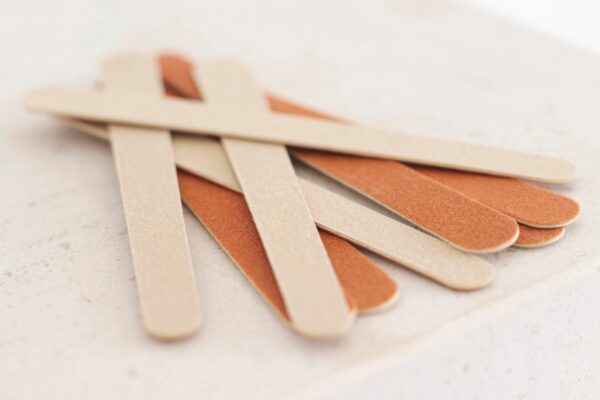
Nail files are often cardboard and sometimes have a plastic core coated with sandpaper. At least one entire football stadium can be filled each year with disposed nail files, and it takes years for one to fully decompose. Local authorities advise that these cannot be recycled due to being contaminated.
Metal files are more sustainable because of the lack of trees used in their production, with only the sandpaper being disposed of between uses. However, metal files take a lot longer than standard nail files to decompose in landfills.
Glass nail files are often considered the most sustainable, as they are largely made from recycled materials and several factories use lead-free, environmentally safe dyes. They are considered recyclable by some, but the majority will consider them contaminated waste.
Bulbs
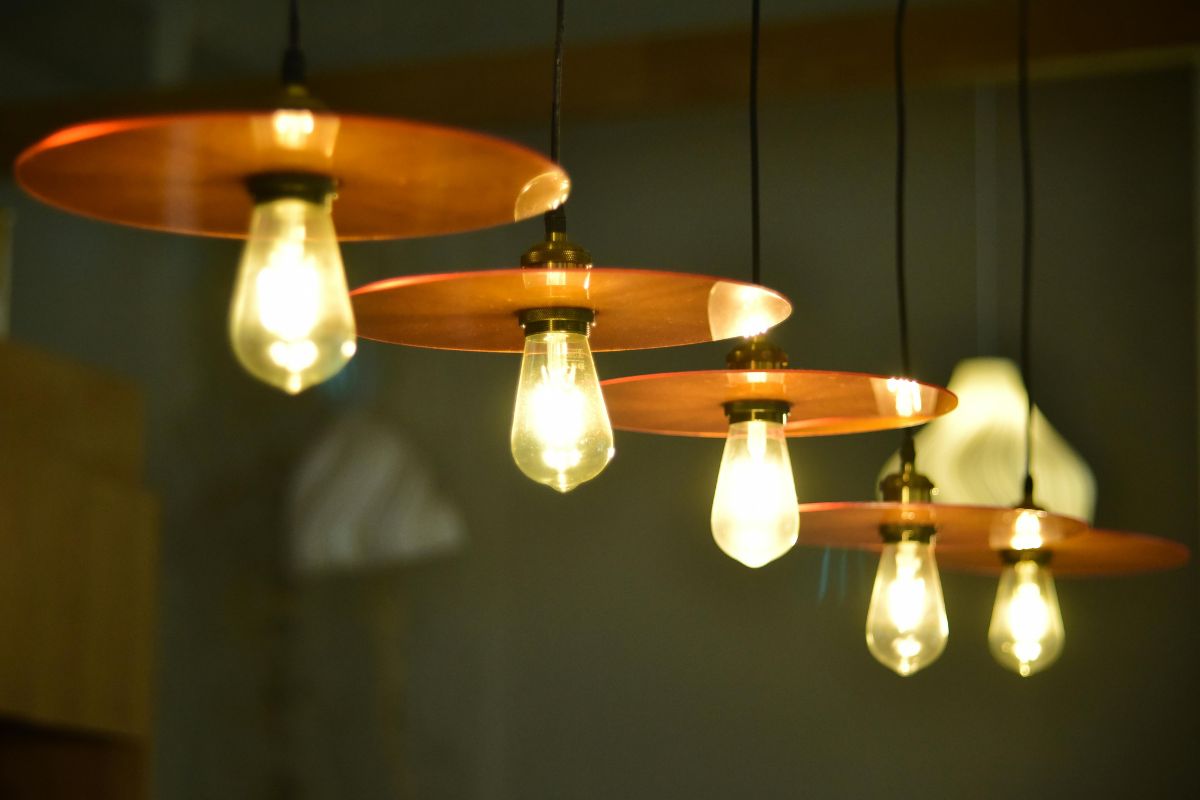
LED bulbs are widely cited as being 80-90% more energy efficient than traditional bulbs, making them better for both the environment and your energy bills.
Only incandescent and halogen bulbs can be disposed of with your regular waste, although some LEDs can be disposed of in this way too. LED bulbs, however, can often be recycled.
Fluorescent tubes and UV bulbs need to be disposed of correctly, following local authority guidance to ensure their contained mercury is safely removed and the aluminium and steel separated.
Wood
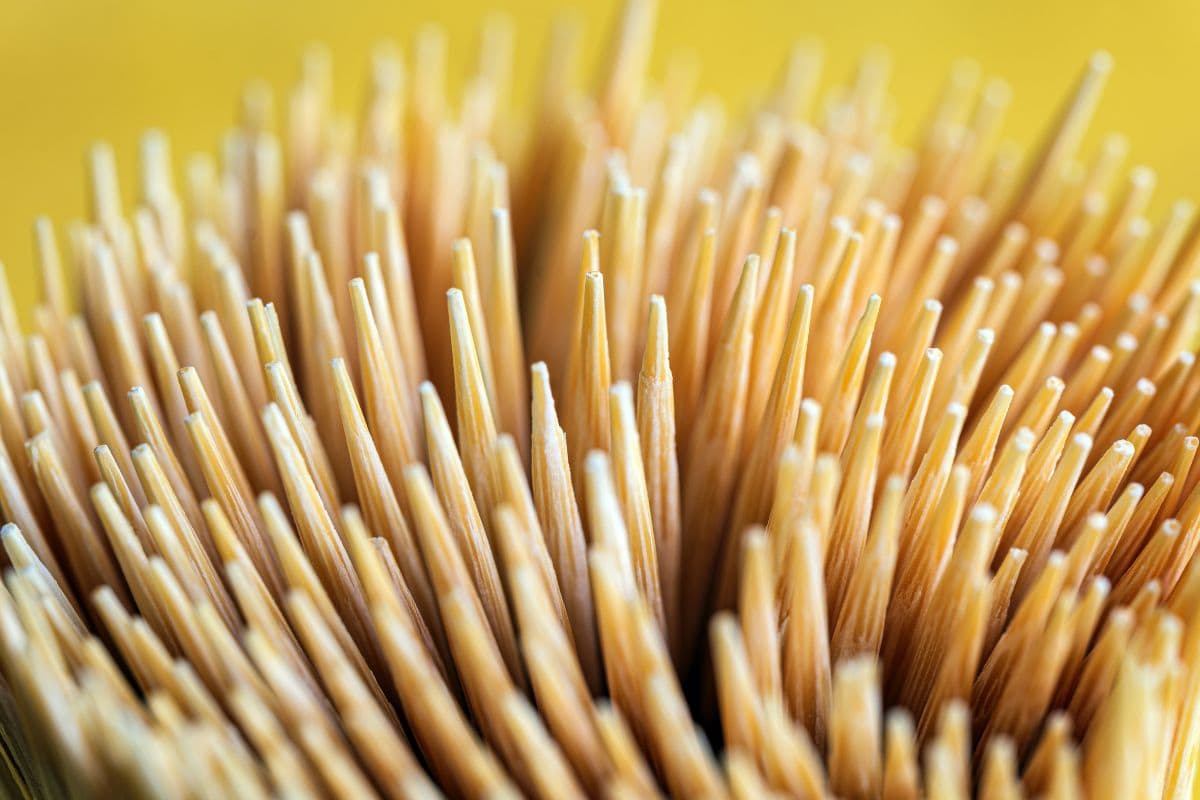
Wood items such as orange wood sticks and spatulas don’t need to go straight to landfill. If you only use half to three-quarters of the length, simply remove the contaminated portion – the remainder can be recycled.
You don’t have to do everything at once; small changes can add up and make a real difference in reducing the industry’s environmental footprint.